What to do
Tonglefang review: who it is for
Tonglefang reviewed: a small converted workshop quarter in Jing'an that runs at night, for people staying nearby who want dinner, a drink or a small live-music room; by day, or on a two-day trip, it does not repay a special journey.
Last updated5 min read
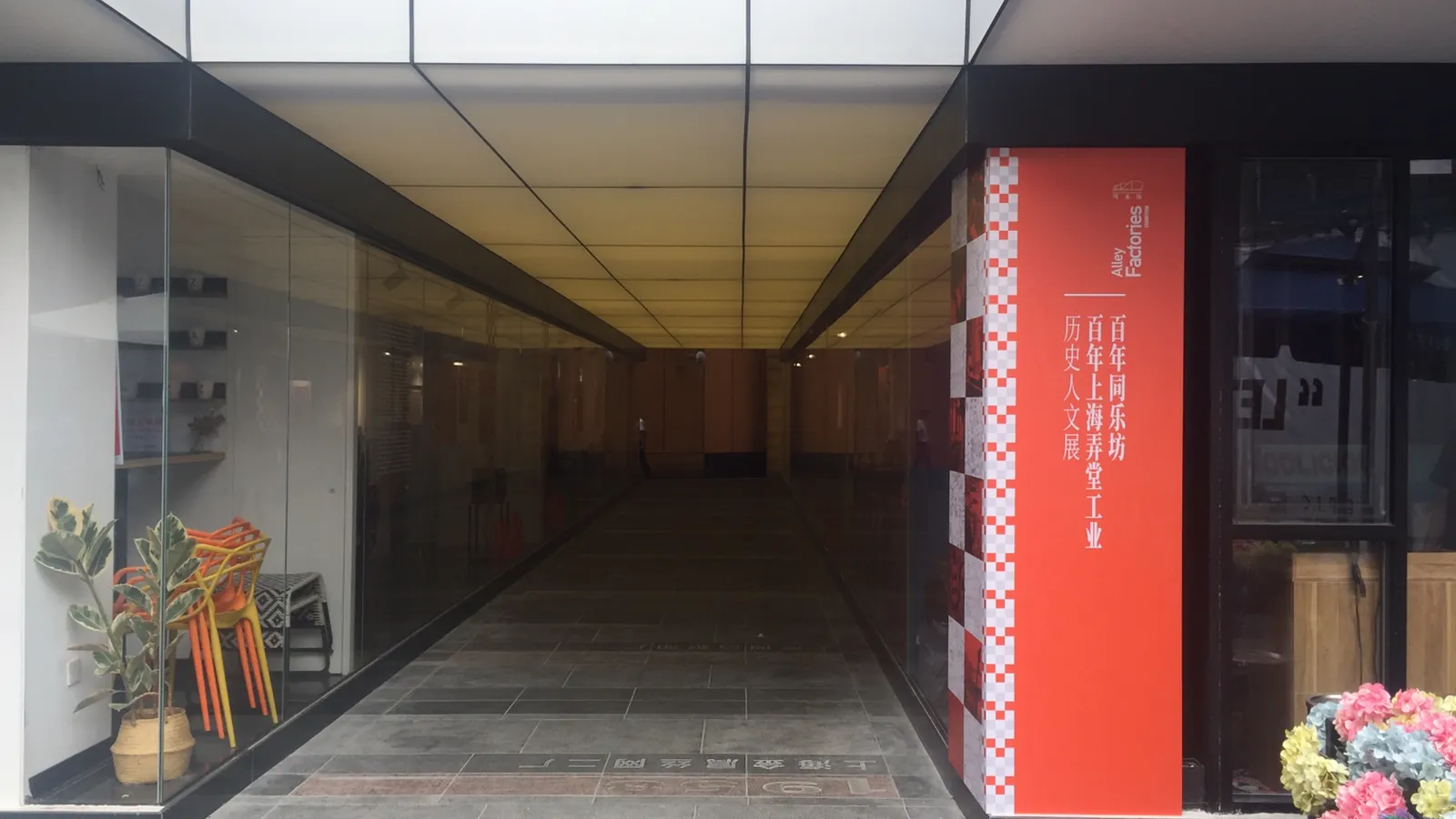
Tonglefang is in Jing’an, around Haifang Road and Yuyao Road: one lane plus a few buildings along the street, a circuit in a quarter of an hour. In the first half of the twentieth century small works and shikumen housing were packed against the same stretch of wall, a textbook case of Shanghai lane industry; today it is a quarter of restaurants, bars, small performances and studios. Which year it was built or remade is not stated and needs checking.
The verdict first: who it is for, and whether to cross the city
The people it suits are specific: anyone staying not far away who wants dinner and a drink in the evening, or a gig in a small room. The people it does not suit are equally specific: a visitor with two or three days in Shanghai and a list. For a journey across the city on its own, fifteen minutes of walking is hard to justify; its correct use is on the way somewhere else.
A structural point: this is a place for the night
Most converted sites hold up two or three daytime hours with paving, water and planting. This one does not. There is no courtyard to sit in, no lawn and no loop to walk slowly; it is a lane, you step in and you are in the lane, straight to the end.
So what you get depends entirely on what is programmed that evening and which places are trading. The walls and windows are there by day, but do not take long to look at. By day there may be very little open at all: shopfronts shut, the exhibition not necessarily open, only residents going about their day. That is not bad luck but the normal state, and the main risk of the visit.
Who it suits, who it does not, and what each thing is worth
Three kinds of visitor fit. First, anyone who wants a gig in a small room: low capacity and close up, though programme and style are not fixed. Second, anyone staying nearby: dinner, a drink, no crossing the city. Third, anyone interested in the reuse of small industrial buildings: what was converted here is genuinely a lane workshop.
Five kinds do not fit. The sightseer: nothing here you must see. A visitor with two days in Shanghai: an evening here does not pay. Anyone coming by day expecting a district to walk around. Families with children: the space is small and the evening is bars and restaurants. And anyone expecting scale and finish: against the larger campuses it will keep falling short.
The buildings: worth seeing, limited in weight. What remains is the gables of small workshops, the old windows and the width of the lane, with glass, steel and paving alongside. The oldness is direct rather than a set, but it is over in twenty minutes, with no facade worth standing before. The performances: the most valuable thing here. What matters in a small live room is distance, a few dozen people and a band in one room, a scale a large venue cannot give; the price is that the programme rotates, so check whether anything is on that night. Food and drink: middling. Bars and small restaurants, relaxed enough to sit down without booking, a disappointment if you travel for a good meal. The surrounding streets: ordinary, but part of the place. Haifang Road and Yuyao Road are a residential district that goes quiet once the shops shut.
How it compares: a difference of kind, not of rank
Each converted site does its own thing. The large landscaped campuses clear squares, lawns and water between the buildings and carry a whole day; Tonglefang is a lane squeezed out, old and new pressed into the same width, taken in quickly but with more direct original fabric; the riverside industrial sites are about the shoreline and warehouse spans. They are not a ranking but three things: a campus, a lane quarter, an industrial site. Choose by which one you want tonight.
How to use it, and the conclusion
By direction is enough: walk in from the Haifang Road or Yuyao Road side and go down the lane once, looking at the walls, doors and windows, then leave; there is no need to set aside visiting time. It is a stretch from a metro station, so follow a map from the exit.
When to go: the evening. Walk the lane first, then find somewhere to eat or drink, and arrive early if there is a performance. There is no reason to make a special daytime trip. Programme schedules and opening arrangements change and must be confirmed on the day; no timetable is given here. What pairs best is the phrase on the way: if it is near where you are going tonight, come in; if it needs a journey of its own, leave it.
For a first-time visitor: if you are staying in Jing’an with four days or more, and you need dinner, a drink or a small gig that evening, a visit on the way past is reasonable; with two or three days and only daylight free, skip it. For a returning visitor: it renews itself more often than most converted sites, so it is worth another look every so often. In one line: treat it as an option for the night, not a sight for the day.
Photographs