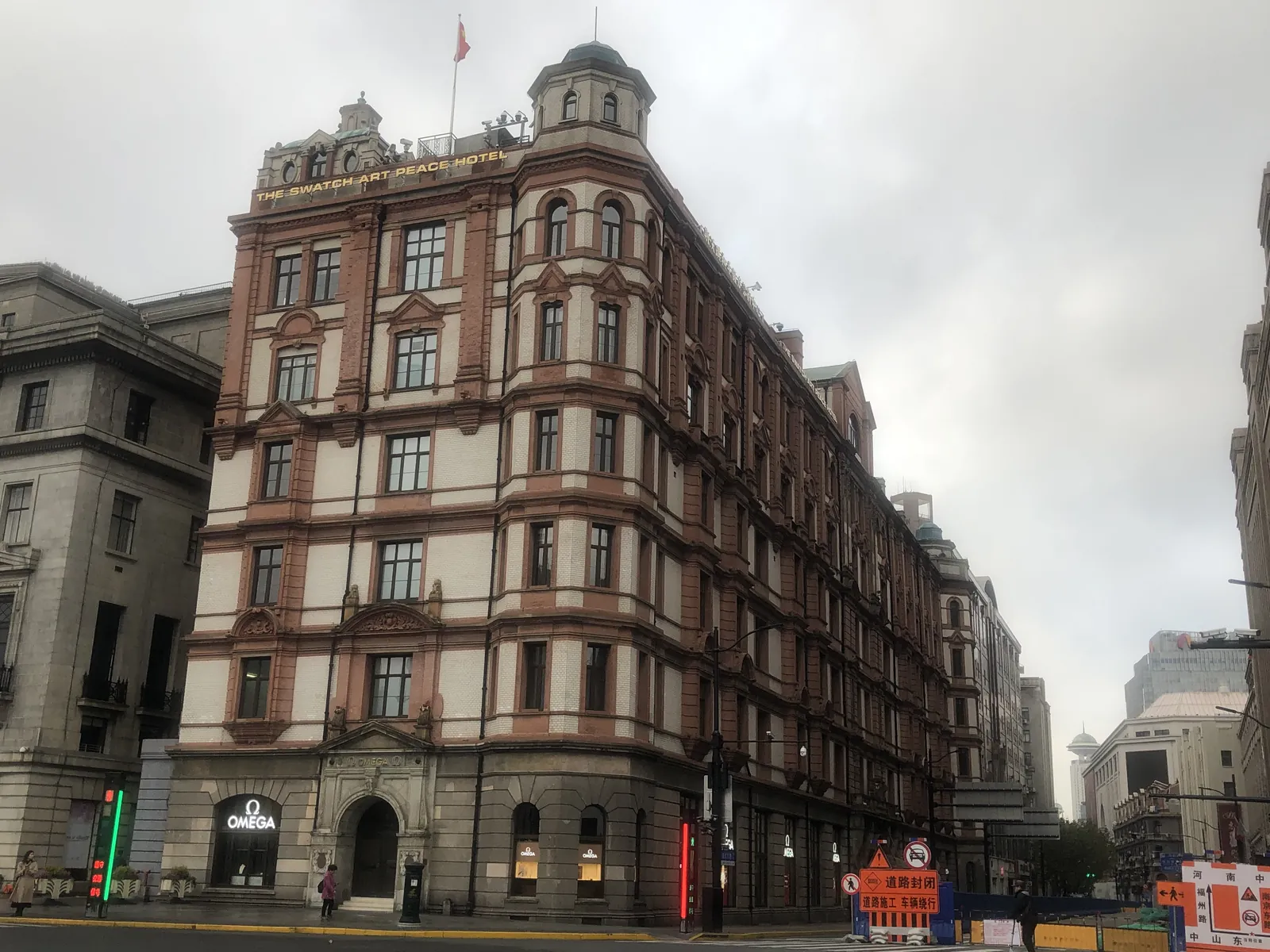
Nanjing Road Pedestrian Street
A pedestrian shopping street on middle Nanjing East Road, running east from the People's Square side towards the Bund, and the busiest retail stretch in Shanghai.
Six ways in
Independent guides, reviews and answers for travelling in Shanghai: where to eat, stay, get around, and what to see, buy and do.
A pedestrian shopping street on middle Nanjing East Road, running east from the People's Square side towards the Bund, and the busiest retail stretch in Shanghai.
category.buy
A review that splits Nanjing Road into its two halves, covering what the pedestrian section actually holds, what is worth buying, which direction to walk, when it hurts most, and who should skip it.
5 min read
Money & payments
Shanghai's shopping areas do different jobs: Nanjing Road and Huaihai Road are commercial streets, the Xintiandi area is malls and brands, Yu Garden is souvenirs, and the outlets are out of town. Here is what each is for, plus the real position on bargaining and tax refunds.
7 min read
Money & payments
The departure tax refund returns part of the consumption tax on goods you buy in China and take out unused, and claims fail over sequence rather than amounts: the participating shop, the passport at the till, the refund form, the customs endorsement before check-in, and the refund desk after security.
6 min read
Money & payments
Tea and silk are the two things visitors most often buy badly in Shanghai: what it means that tea is priced by grade and origin and silk by fibre content, what you can actually see and test in a shop, the set-ups to recognise, and what is worth buying.
8 min read
Money & payments
The 老字号 label is a status granted for age and reputation rather than quality today: what it actually covers, how to read a shop in a few minutes, what is worth buying, and what is only a box.
7 min read
Health
What to do when something runs out on day three: how a Shanghai pharmacy works, which categories to ask for by symptom, what convenience stores and supermarkets each cover, and when to go to a hospital instead.
7 min read
Internet & apps
What the sockets look like, what 220 volts means for 110-volt equipment, where to buy an adapter, and why a phone should not be replaced here.
7 min read
Etiquette
Anyone who likes books or paper finds Shanghai unusually good at both, and almost nobody tells them: what each kind of bookshop is for, what a non-Chinese reader can actually buy, why the stationery shops are the stronger recommendation, and how to carry a seal home.
7 min read
Money & payments
A wet market sells food to households; a specialist wholesale market sells one category to the trade, and to anyone who walks in. Here are the seven kinds, what you can buy in each, and why the wholesale way of selling trips a visitor up on the first purchase.
7 min read
Etiquette
The hard part of a gift from Shanghai is not choosing it but getting it home in one piece and through customs: what travels, why you should ask for the box, what the box costs you, and what makes a gift land here.
7 min read
For most visitors, Nanjing Road Pedestrian Street is worth walking through if you are already nearby, but not worth a special trip. It is the vehicle-free middle section of Nanjing East Road, lined with department stores, chain brands, time-honoured names, snack counters and souvenir stalls, with the history surviving only in a few old department store facades and most of the goods available in other cities too. Its most solid use is as a free walking route between People's Square and the Bund; for serious shopping the Jing'an Temple stretch of Nanjing Road West is better, and anyone who dislikes crowds or expects old Shanghai can skip it.
What is actually worth carrying home from Shanghai is food and tea that travels, everyday household goods with a real use, stationery and textiles, rather than the airport fridge magnets and keyrings. Locals buy these in department-store food halls, time-honoured food shops, supermarket chains, wholesale and market districts and museum shops, where prices are marked and haggling is neither needed nor expected. Tea and silk are the two categories most often bought badly, so buy them by grade and fibre content, and check your own country's customs rules before carrying food or tea across a border.
The answer depends on how the price appears. Chain shops, department stores, convenience stores, supermarkets, most restaurants and anything carrying a barcode are fixed-price, and asking for a discount only puts the staff in an awkward position; in markets and individual stalls, antique and curio shops and tourist-market stalls, where a person quotes the price, there is usually room to counter, and countering is how that kind of transaction is done. The common mistake is bargaining where it is not done and paying the first quote where it is, so judge by the form of the price rather than by how the shop looks.
A Shanghai supermarket is worth one deliberate visit: restaurants here are not cheap, and the supermarket is the most direct way to eat breakfast and lunch well and cheaply, as well as the fastest way to see what people actually eat. The most useful kind for a visitor is the food hall in a department store basement, where prepared food, a bakery, fruit and imported goods share one floor, office workers buy their lunch, and no Chinese is needed. Prices are on the shelf rather than at the till, produce is weighed and labelled by the customer, and payment is by phone.