Etiquette
Guangfulin: the Shanghai archaeological site most visitors miss
Guangfulin in Songjiang is a genuinely excavated settlement site turned into a park and exhibition complex, with halls sunk under a lake. Here is what it is, what you actually walk through, whether the archaeology is told well, and which parts are flat.
Last updated6 min read
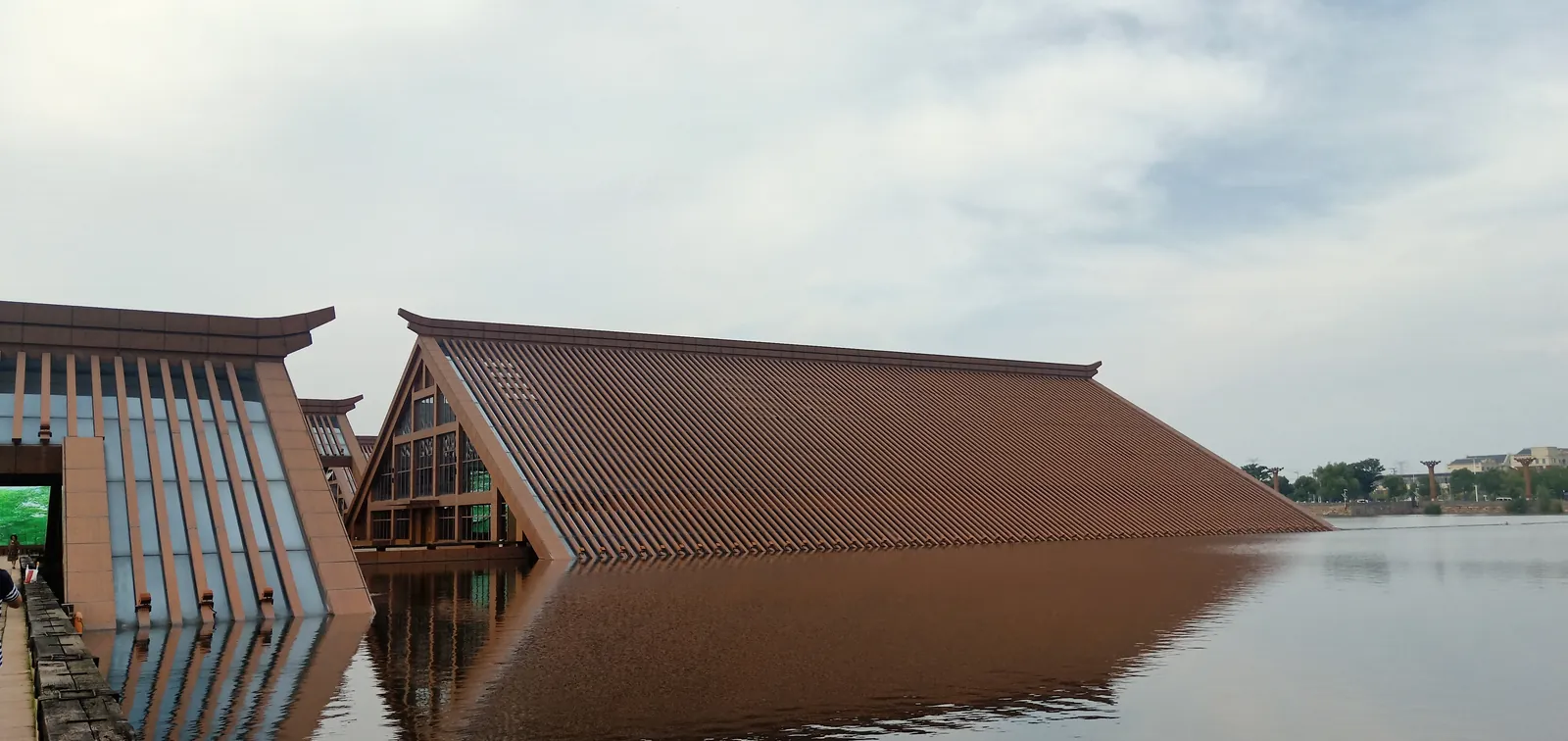
Guangfulin sits in Songjiang, in Shanghai’s south-west corner. It is a settlement site that was genuinely excavated and is now a park you can pay to walk for half a day. Its signature is a group of halls sunk in a lake, their roofs slanting up out of the water, which travel much further in photographs than the name does.
What it is, and why it matters
The layers here are continuous: Neolithic deposits with traces of later occupation stacked on top, running through to the era of written records.
It gets raised repeatedly because part of the excavated material does not fit the local sequence. The forms and decoration sit closer to contemporary cultures of the north and the Huai river region, which opens a question still without a settled answer: where Shanghai’s earliest inhabitants came from, how much developed locally, how much arrived with incoming groups. Guangfulin is among the most important evidence in that argument.
For Shanghai, the site’s work is rewriting the depth of time. Most accounts of the city begin with the treaty port; Guangfulin attaches a far longer prehistory in front of it. Whether its layers are the very earliest locally is disputed, so the safe statement is that it is one of the most important early settlement sites known in the Shanghai area.
What you actually walk through
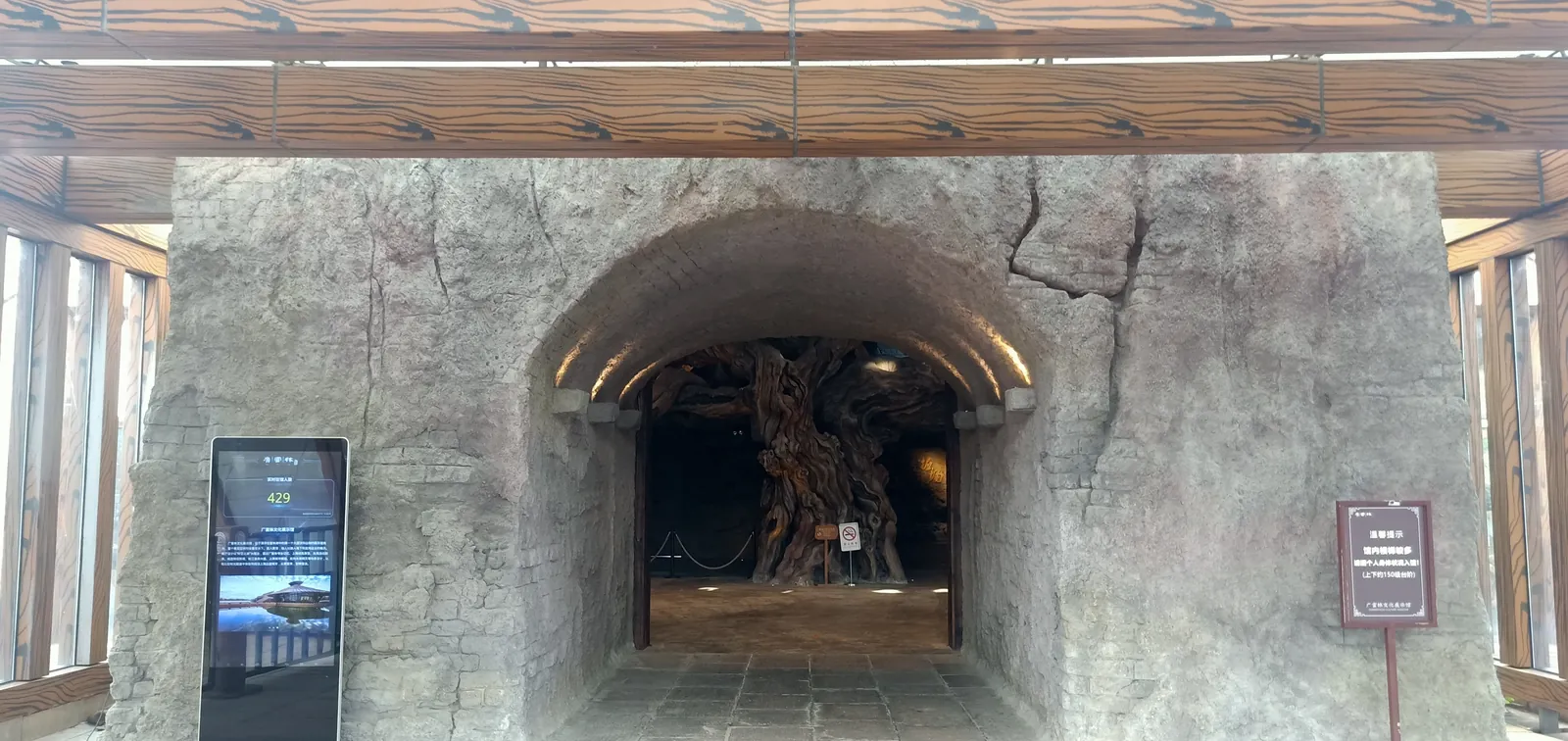
The visitor centre at the entrance is itself part of the display. You reach a rough masonry arch, dark inside, facing a massive ancient tree trunk; walk through it and the light drops, the temperature drops, and you are underground.
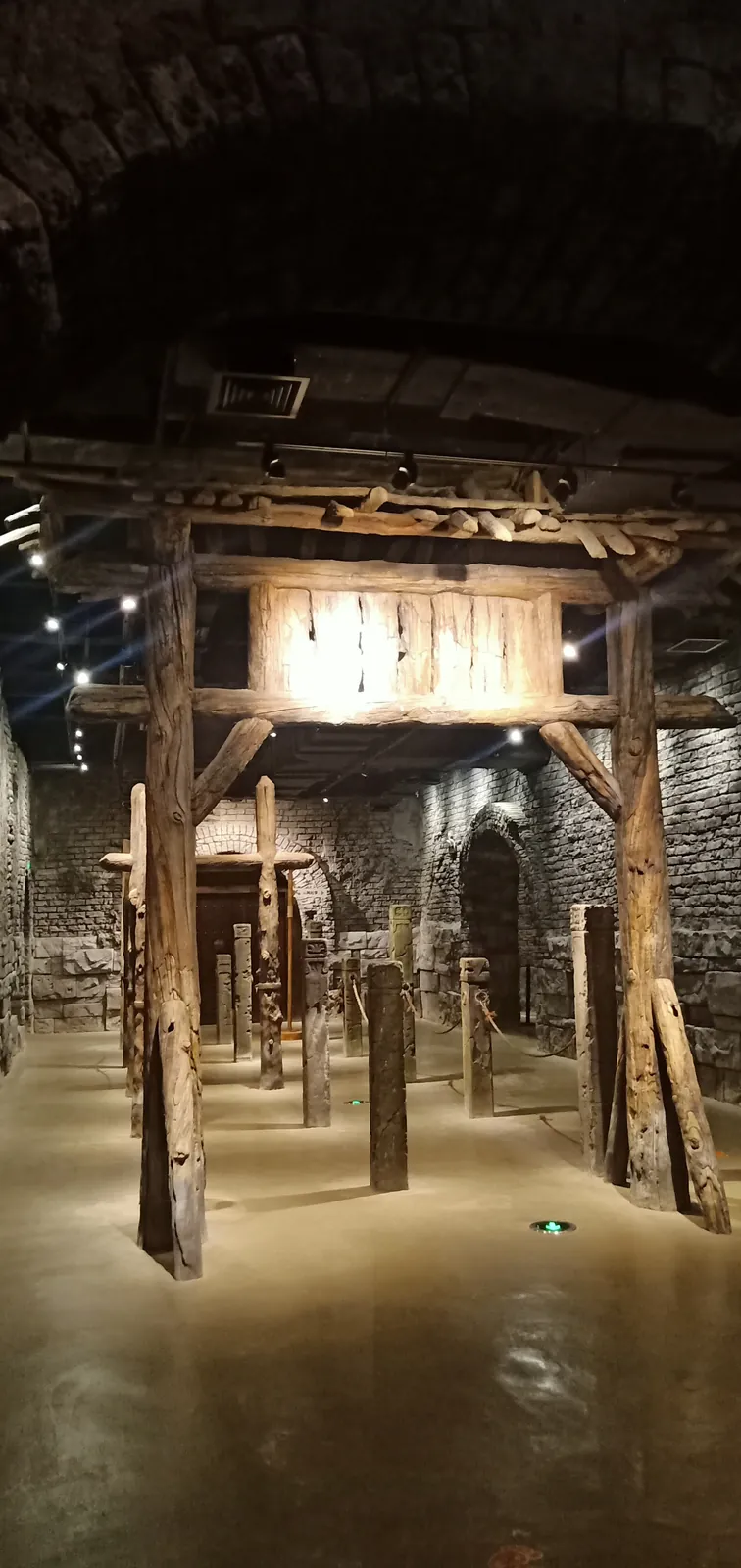
Below ground is a series of connected halls, each with its own theme, linked by passages. Further on comes an underwater gallery with exhibition space at the sides and lake water beyond the walls, light filtered through it, the quietest place in the park. You come back up at the far end.
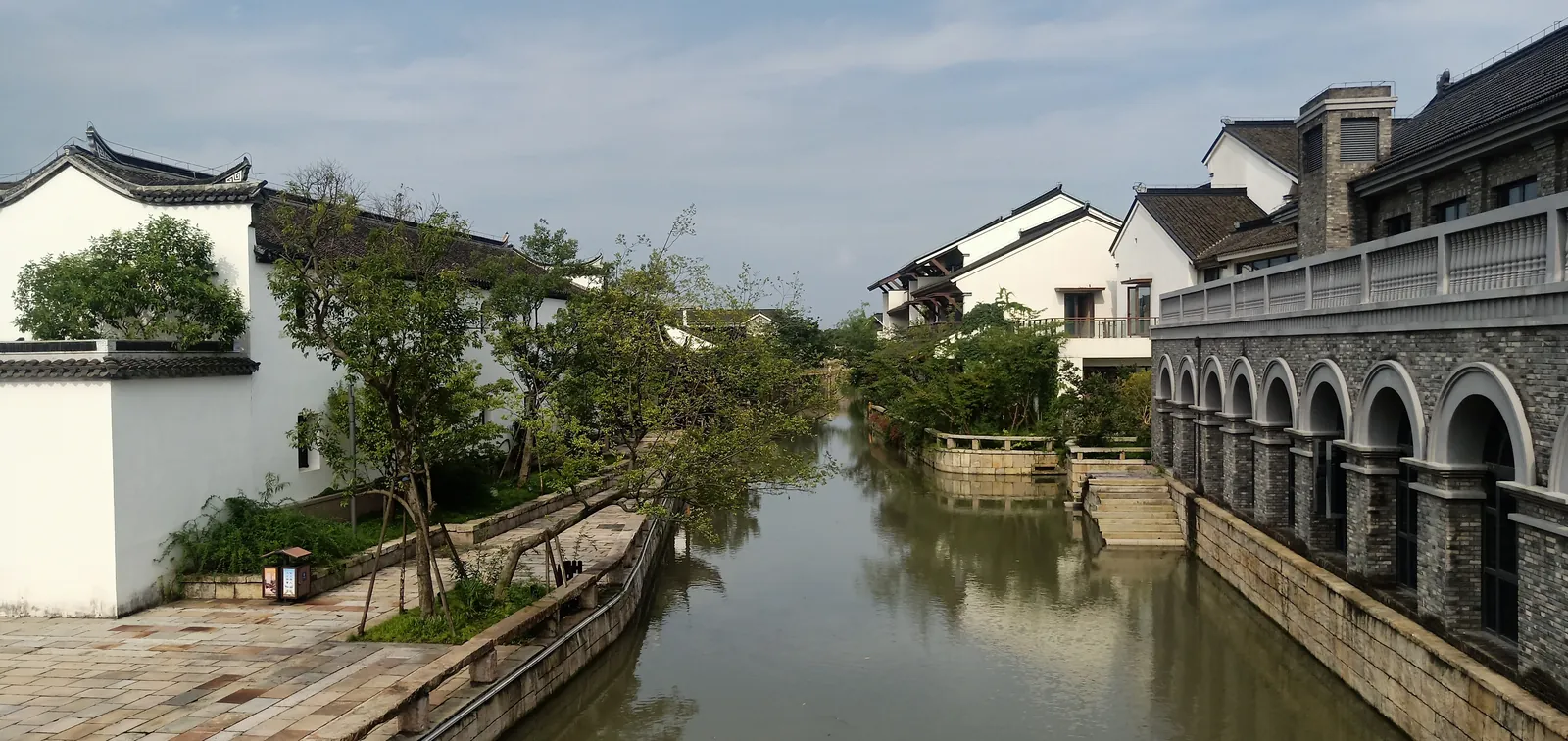
Above ground the park is organised around water, and you can walk the whole lake: stone steps, flat bridges and paved paths at the edge, white-walled, dark-tiled Jiangnan buildings on one side and a grey brick range with a run of round arches at ground level on the other. At the far end of the lake stand a smaller pond, a multi-storey pagoda and a group of temple-style halls with red columns and gilded roofs. Core area plus underground halls is a two-to-three hour walk; skipping the halls and just looping the lake takes an hour. You are on your feet throughout and the distances are longer than they look, so wear something comfortable.
How the archaeology is presented
This is not a live dig. The excavation finished years ago; what you see now is a protective structure, exhibition halls, theatrical sets and landscaping, and anyone hoping for open trenches and finds in situ will be disappointed.
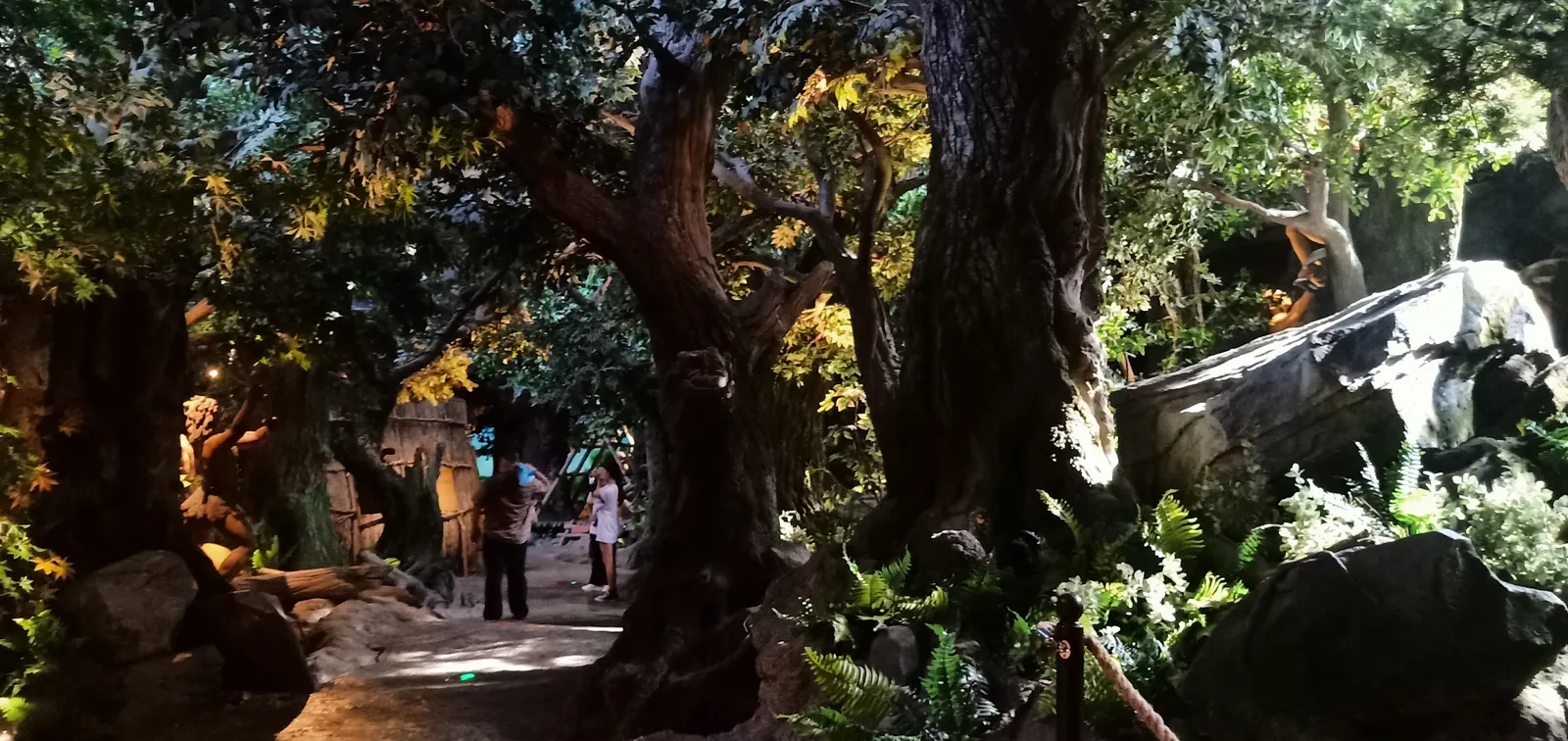
The underground halls are immersive rather than museological, rebuilding several scenes with set dressing, lighting and sound: the environment of an early settlement, the streets of an ancient town. That works, because stratigraphy, settlement and waterside life are hard to convey in a glass case and easy to grasp when you walk into a staged version of them; with children, this is the section that lands.
The cost is on the other side. There are not that many real objects, and they sit inside a narrative that has already been written for you: the story runs smoothly, the line between evidence and inference is not drawn clearly, and claims of earliest and first appear fairly often with little about how solid the conclusions are. Several pots are shown in well-lit vitrines with bilingual object labels, which shows real effort to state origin and date, but a visitor has to pick those details out of the surrounding spectacle.
So is this archaeology or scenery? Both. What is done well is genuine: the design of the underground space, the underwater gallery, the bilingual labels. What is overdone is the packaging. A substantial part of the park is newly built period-style architecture, now carrying shops, a hotel and restaurants, and inside it you cannot easily tell what is exhibit and what is business.
Getting there, and how a half day works
Guangfulin is in Songjiang, and from the city centre that is typically over an hour each way, depending on where you start. The straightforward approach is rail transit in the Songjiang direction, then a taxi or a connecting bus from the station to the park entrance. Routes, interchanges and shuttle arrangements change, so re-check the day’s official information before setting out: opening hours, whether booking is needed, which entrance is open and the last entry time. Driving is simpler, with parking around the park.
Count the return trip. Allow at least half a day: two to three hours on site and two to three hours travelling, with the remainder as buffer for connections and waiting; if you want to combine it with something else, plan a full day. There is a free green space just outside the park. On timing, the stretch after opening is best, with the underground halls cool and quiet; afternoons are harshly lit outdoors, weekends and holidays queue, and in summer you need sun protection and water.
For pairing, old Songjiang town has a garden, old streets and a pagoda of its own, and it complements Guangfulin neatly: one place for a thousand years underground, the other for the Ming and Qing above it. Both in one day works if you start early. The Sheshan area to the north is hills, a church and a botanical garden, better for people who want outdoors. Hours and booking arrangements differ between all of these, so arrange them from the day’s published information.
What is genuinely underwhelming
Distance is the first thing. Two to three hours of round travel for a mid-sized themed park is a poor trade if all you do is walk the grounds above water.
Second, the density drops off. The hour or so underground is substantial; the period-style architecture above it is where people lose their bearings, with repeated displays, rows of shops and empty courtyards, and somewhere in there the visit shifts from learning something to walking and photographing.
Third, the sense of age has been smoothed away. Almost everything in the park is new: new walls, new paving, newly planted trees. It interprets a site, but you are not standing in one. The pagoda and the temple-style complex are the same story: scenery rather than monuments, better photographed than visited.
Fourth, the practical side. Food inside is snacks and simple meals priced on scenic-area logic, there is nowhere decent to sit down inside the underground halls, and the surroundings are new-town, without the turn-a-corner options of the city centre. Anyone who genuinely wants objects is better served by the city’s history museum, whose collections are far more systematic. Finally, English information: vitrine labels are bilingual, but park signage, food and announcements are mostly Chinese, so visitors without Chinese will miss a good deal of the explanation.
Who it suits: people interested in archaeology and early history who will spend a slow hour in the underground halls; families with children, since the underground section works for kids and the grounds give them room to run; and anyone with a loose itinerary who can give up half a day or a day. Who can skip it: anyone in Shanghai for only two or three days with a full schedule, because this does not rank in the top ten; anyone who came for old Shanghai streets and republican architecture, since this covers a much earlier period in an entirely different idiom; anyone who dislikes walking; and anyone expecting real trenches and finds in place.
place.gallery
Photographs