Etiquette
Wukang Road and the old villas: a walk to take slowly
The Wukang Road area is a garden-villa district laid out in the 1920s and 1930s, and it is still residential. How to walk it north to south, why the Wukang Building cannot be avoided, what else is worth stopping for, and where the reputation and the reality part company.
Last updated7 min read
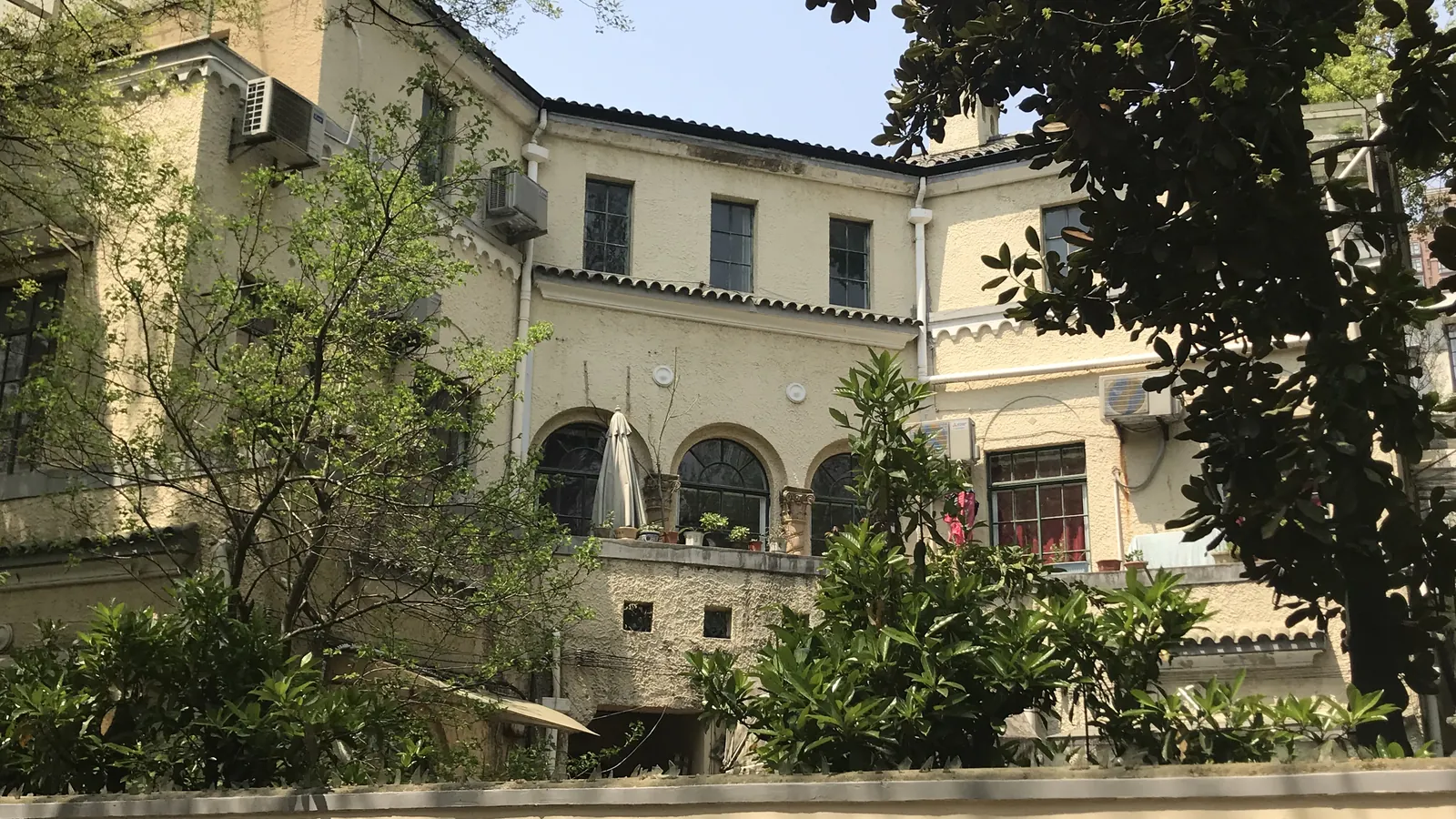
One misunderstanding is worth clearing up first: Wukang Road is not a sightseeing street. It is, above all, a residential district where people still live.
What this area actually is
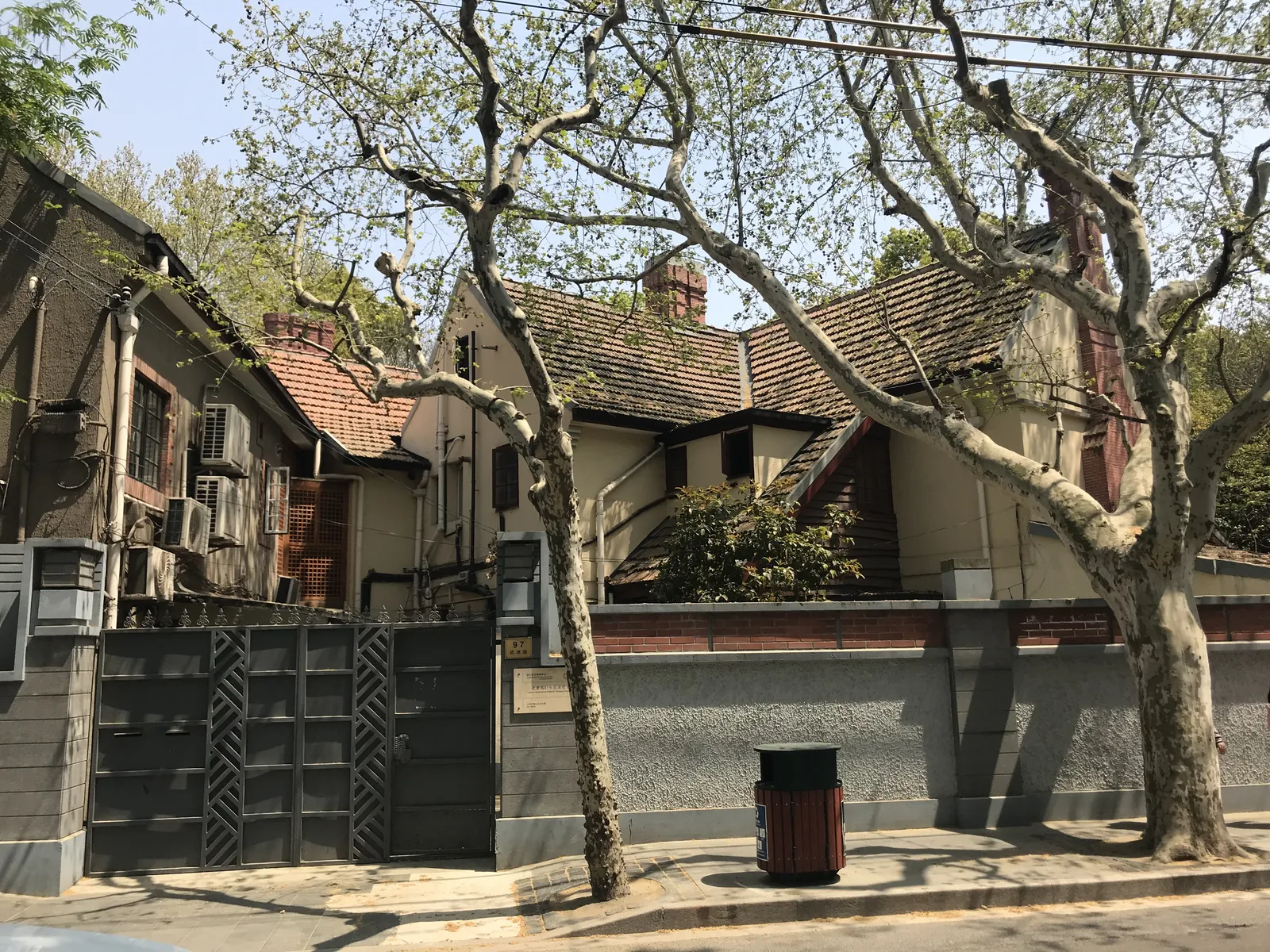
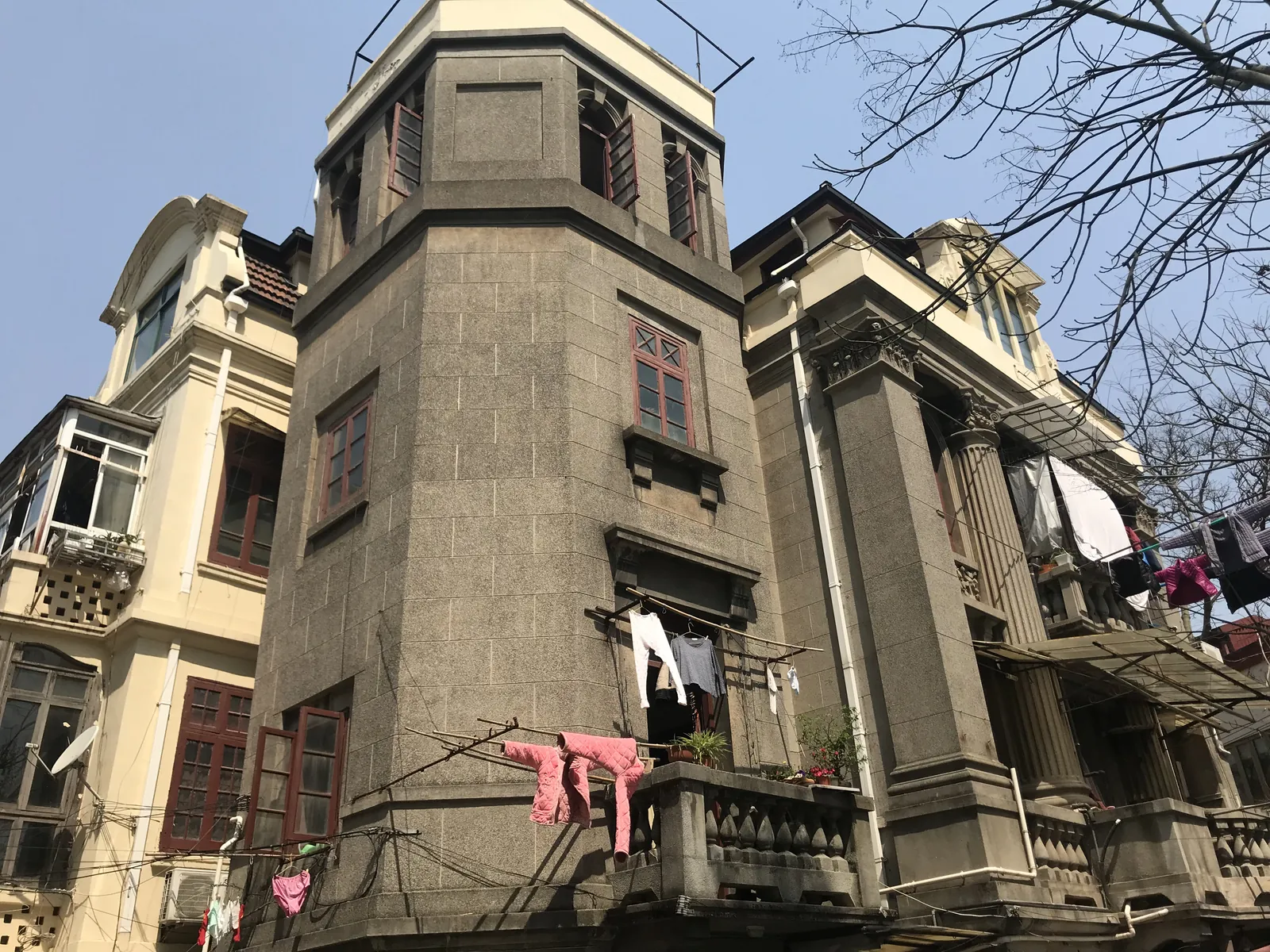
Wukang Road runs through Xuhui district, a little over a kilometre from the Huaihai Road end in the south to the junction with Wuyuan and Xingguo Roads in the north. In the first half of the twentieth century this ground lay in the area the French concession built up beyond its formal boundary: the street pattern took shape in the 1920s, and detached garden houses and low apartment blocks went up along it through the 1920s and 1930s, the buildings locals call laoyangfang, old foreign-style houses. The street trees planted in the same years, London planes, grew into the most constant feature of the place. It is still a residential district today: boundary walls, iron gates, flower pots on balconies and bedding hung out to dry are the marks of ordinary life, not a stage set, and what you can see from the street is usually just outer wall, eaves, a chimney and a gatepost.
The architecture is mixed. Spanish-style red pantile roofs and arcades, English rural half-timbering, Art Deco with smooth rendered walls and rounded corners, a few corner blocks with stone-clad facades. Do not expect to check styles off one by one, because the street shows you fragments. The plane canopy closes over the whole road in spring and summer, and only after the leaves fall do the buildings’ outlines appear, which is why the same street looks like two different places depending on the season.
Etiquette belongs at the front, because it matters more than the route. The boundary walls, iron gates and lanes along the street are not attractions, and many buildings are not open; there is no visitor signage at the door. Photograph with restraint: do not point a camera at windows, balconies or residents, and do not step into a gateway or a lane entrance to get a composition. If you see a sign declining visitors, accept it rather than trying to negotiate. Volume, litter and where you leave a shared bike all follow the rules of a neighbourhood.
A route, north to south
Treat it as a line with a direction, not a checklist. Start at the junction where the Wukang Building stands, the one landmark on this stretch you cannot avoid, then walk southwest along Wukang Road past Wuyuan Road and Hunan Road to the Fuxing West Road area, and leave via Huaihai Road. Beginning at the northern end helps because the metro reaches it and you walk from the busiest point towards the quietest.
Past the building the pace changes: traffic thins, the trees and walls set the rhythm, and the branches close into a corridor overhead. What is worth looking at here is not a sight but the layering of planting on both sides and the scale of the street.
Further south, around Hunan Road and Fuxing West Road, the junctions shrink and small streets branch off, and those are the point: they pull the district down to a human scale, so a lane a few dozen metres long often holds a gateway, an old terraced house and a later shopfront at once. Finishing near Huaihai Road is the practical choice, with metro and food both there, and if you want a loop you can turn back in the southern section via Hunan Road or Fuxing West Road and rejoin the northern end; the extra time is the part you spend sitting in a small park.
The Wukang Building, and the crowd around it
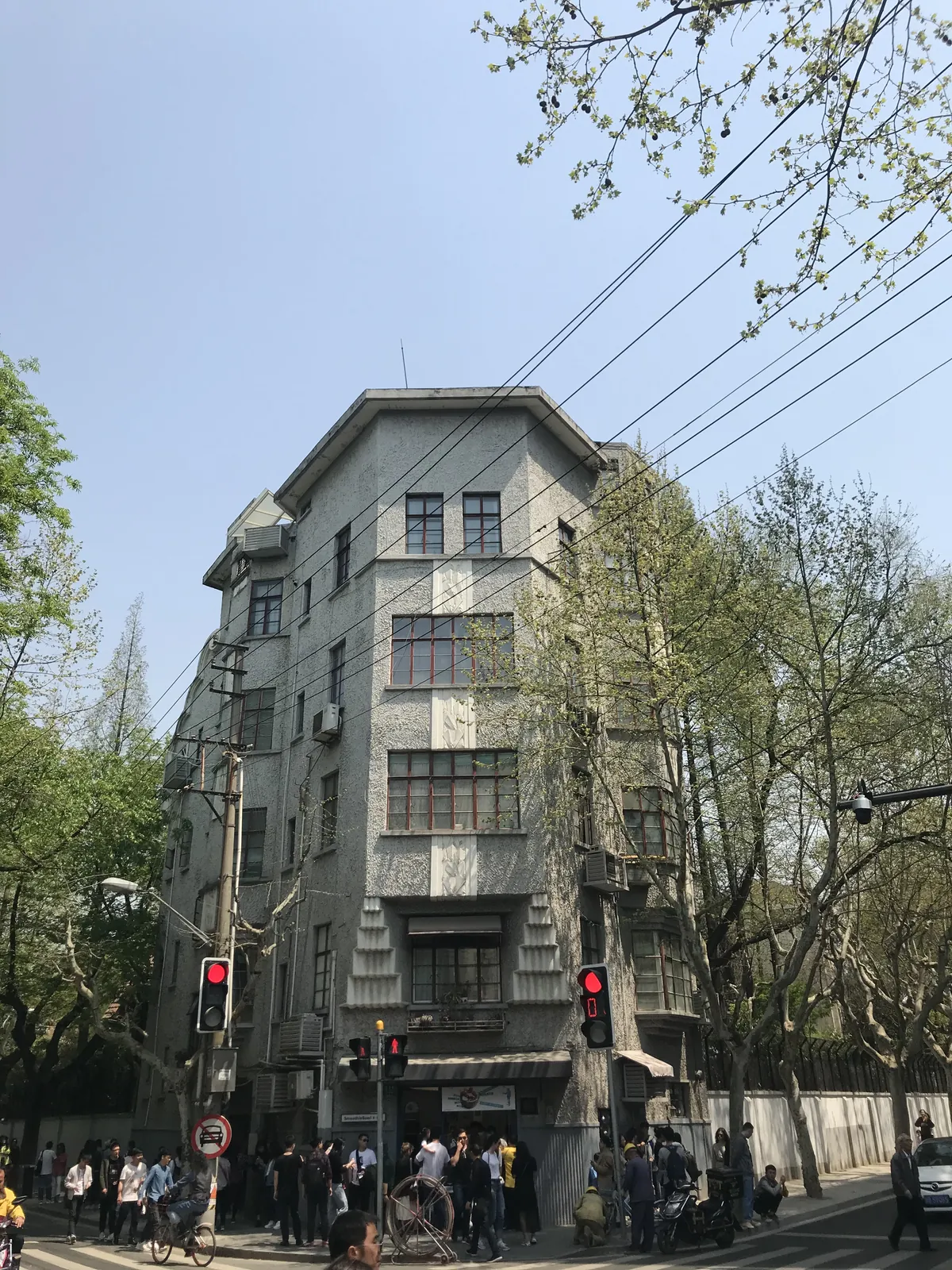
The Wukang Building is both the centre of this area and its narrowest point. It stands on the sharp corner where several roads meet and spreads along the shape of the junction like a ship’s bow. The reason it gets photographed again and again is straightforward: from whichever direction you approach, you get a complete facade with a turn in it, and the ground floor is an open arcade, so the part people walk through is continuous with the street.
The crowd is just as easy to read: the building sits at a busy junction, the pavements are narrow, and people photographing it often stand near the crossing and disperse together when the lights change. It is most crowded from afternoon into evening, and all weekend. The light is a separate matter: morning and afternoon fall on different facades and it looks like two buildings. For a clean photograph, the best position is the opposite street corner rather than the doorway below. Most photographs also show this one building only: come expecting it to represent the whole district and you will be disappointed; come treating it as the start of the walk, and it does its job.
What else along the way is worth stopping for
What is worth walking is the road and the buildings along it, not any individual sight. What shows above the boundary walls is usually a first-floor balcony, a red-tiled pitched roof, a chimney, a gable, and buildings, trees and walls together make the street scene; no single house on its own is as good as the road.
The small parks and corner squares set inside the blocks are worth going into: they are not large, but they are the only places here where you can sit down legally without buying anything, and the view from a bench is usually better composed than anything at street level. The side lanes and branch roads are worth one look too, since the main facade of an old villa is usually hidden inside its plot while a side elevation shows at the end of a lane.
Eating, coffee, and how long to allow
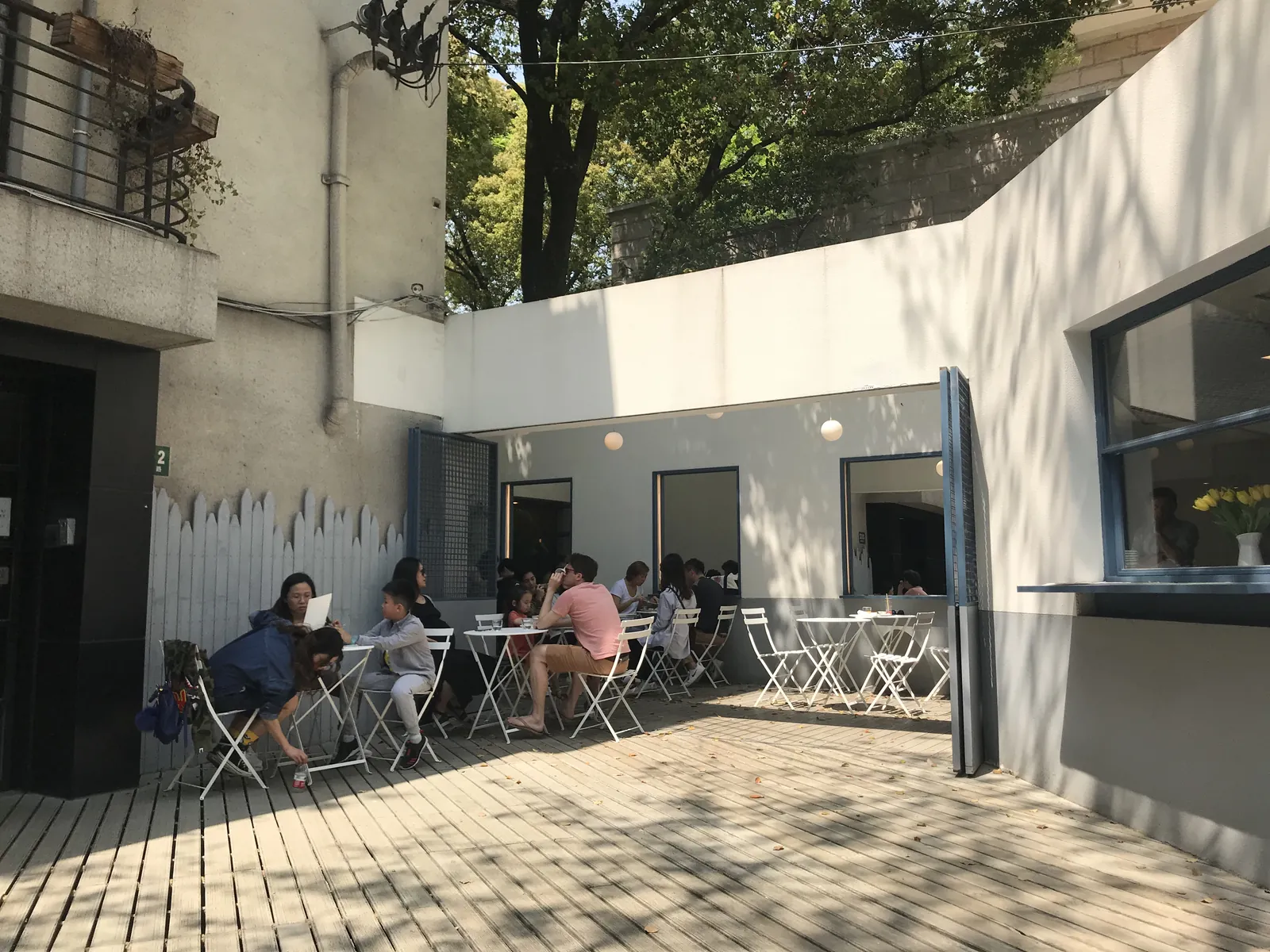
Coffee is the densest trade here, from shops with nothing but a serving window to places with seats in a courtyard; prices run high, and what you are really paying for is the position and the yard. Small restaurants and noodle shops sit among them, lunch is more reliable than dinner, and bread and ice cream suit eating while you walk. For a proper dinner, go a few blocks north or south of Huaihai Road, where there is more choice and more of it is cooked for residents. Hours and menus change, so take what is posted at the door on the day.
Allow half a day, three to four hours, including two sits: one for a drink and one in a small park. If all you want is a photograph of the building and a short circuit, forty minutes is enough. What you must budget extra for is deceleration: crowds, photographs, narrow pavements, waiting at crossings. Afternoon into early evening has the most comfortable light, weekend midday to evening is the peak, and early morning is quietest. Light rain is worth walking in: fewer people, deeper colours on the walls, at the cost of slippery paving. Reaching the area by metro usually means getting off at Huaihai Road or a stop further north and walking a stretch. Take care with small children or a pushchair, since the pavements are narrow, the junctions frequent and tree roots have pushed the paving out of level.
Myth and reality
Online, this area has been photographed into an open-air villa attraction. It is not one. Nine out of ten pictures are the same building from the same angle, and most of the rest are plane trees plus a villa facade; neither is untrue, but neither amounts to a whole district of villas you can walk into. This is a residential area, what you see is the outside of buildings rather than the inside, and the best viewing position for most houses is outside a wall and behind a tree. Arrive with a list that must be completed and you will most likely end up with twenty similar photographs and a long wait in a crowd.
A more honest expectation is this: it is one street, one walk, an hour to half a day, and the point is to move from the busiest junction towards the quieter stretches, sit under a plane tree once in the middle, and then leave. Not getting inside is not a disappointment; it is the definition of the place. Who it suits: anyone interested in buildings and streets as such, happy to walk for more than an hour and not expecting to go indoors. Who it does not suit: anyone coming for a single photograph, and anyone who dislikes walking. People still live here, which both limits what you can do and makes the street more worth walking than a commercial one.
place.gallery
Photographs
Related reading
Etiquette
How to walk the Bund: timing, route, and the mistakes people make
The Bund is a 1.5 km riverside promenade where the old buildings and the Pudong skyline face opposite ways. Here is when to go, which end to start from, and where visitors get it wrong.
5 min read