What to see
Panlong Tiandi review: is a newly built old town worth it?
Panlong Tiandi reviewed: a canal-side commercial quarter built on the site of an old village, not a preserved old town. What it actually is, what is done well, what is only set dressing, whether the food and shopping justify the trip, how it compares with Zhujiajiao and Nanxiang, and who should come and who should give the time to somewhere else.
Last updated5 min read
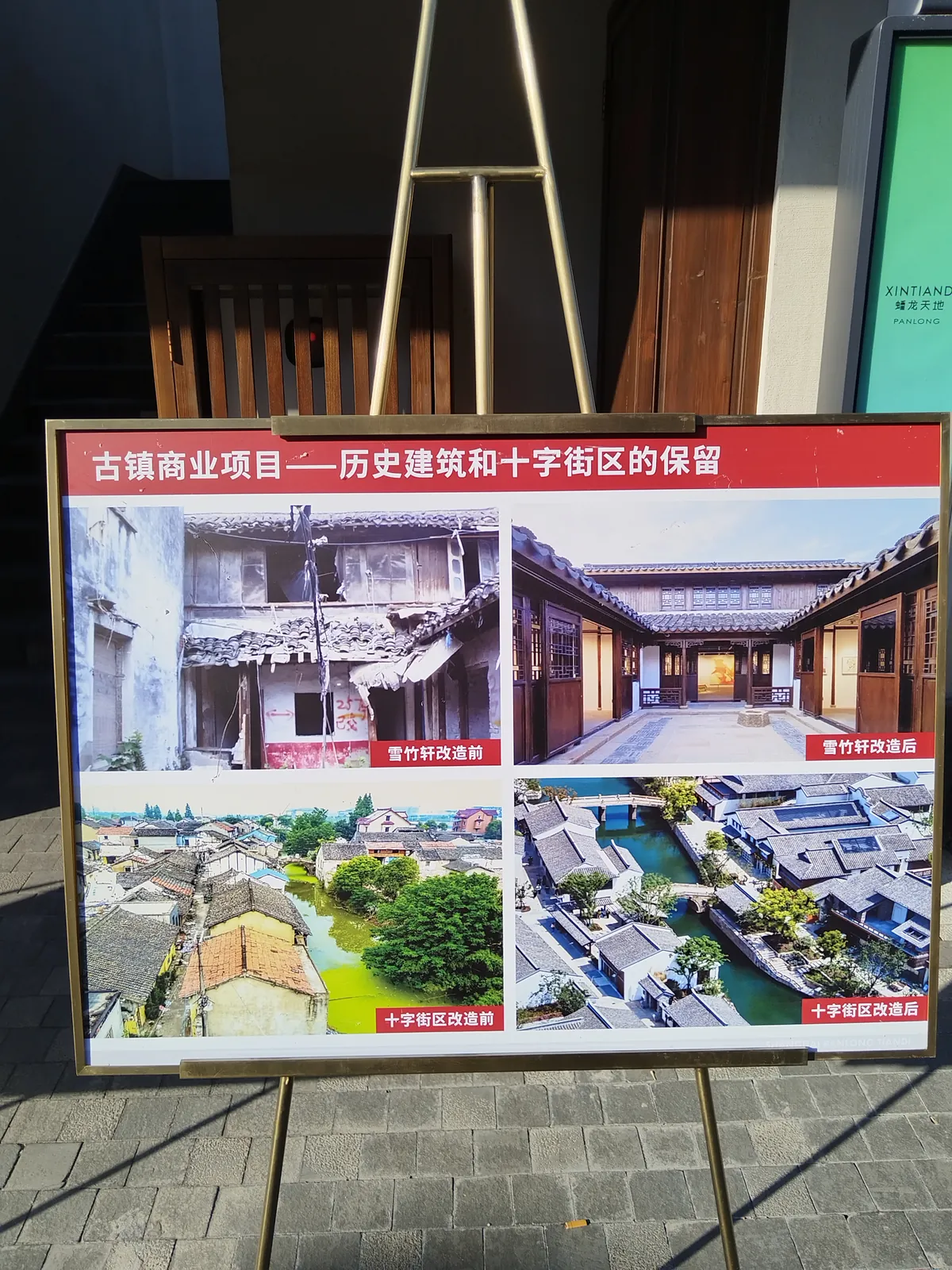
Panlong Tiandi lies in Qingpu, on Shanghai’s western edge towards Hongqiao. This was a real waterside village of canal, old houses and a bridge at its entrance; it declined and was cleared, and today’s quarter was built on its land. The project’s own display board calls it an old-town commercial project, with before-and-after photographs side by side.
That distinction is the point. In a restored historic settlement the bulk is surviving old buildings and new work is patching; here the bulk is new and the old fabric is what is left over. Stone, timber, tiles and convincingly weathered walls are almost all from this round. Rebuilding is not automatically bad, yet the label of an ancient town does not hold: treat it as a district built in waterside-town forms and what you see matches what you paid for. Its earlier history and the redevelopment timeline are contested, so no years are given here.
What has been done well
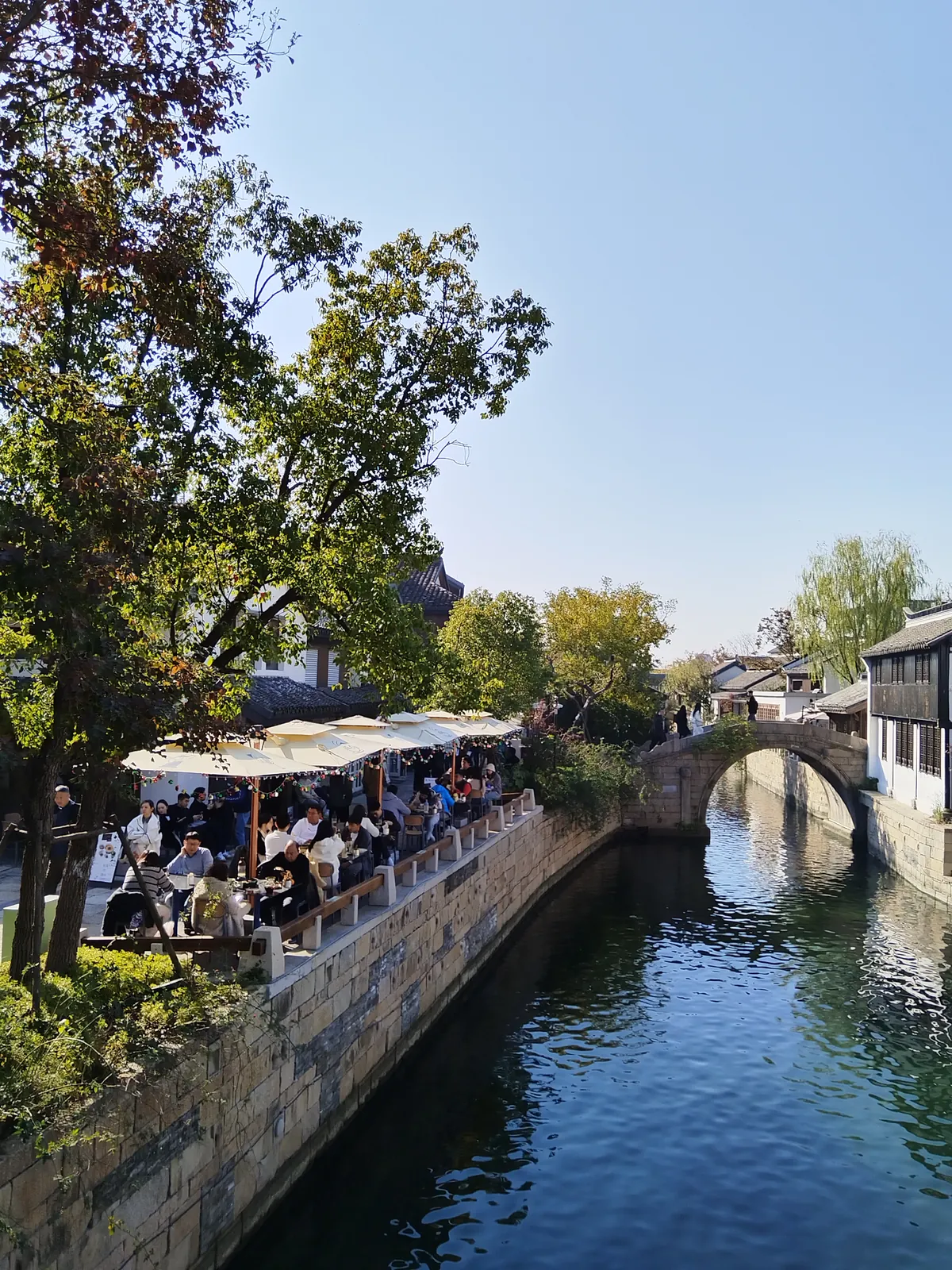
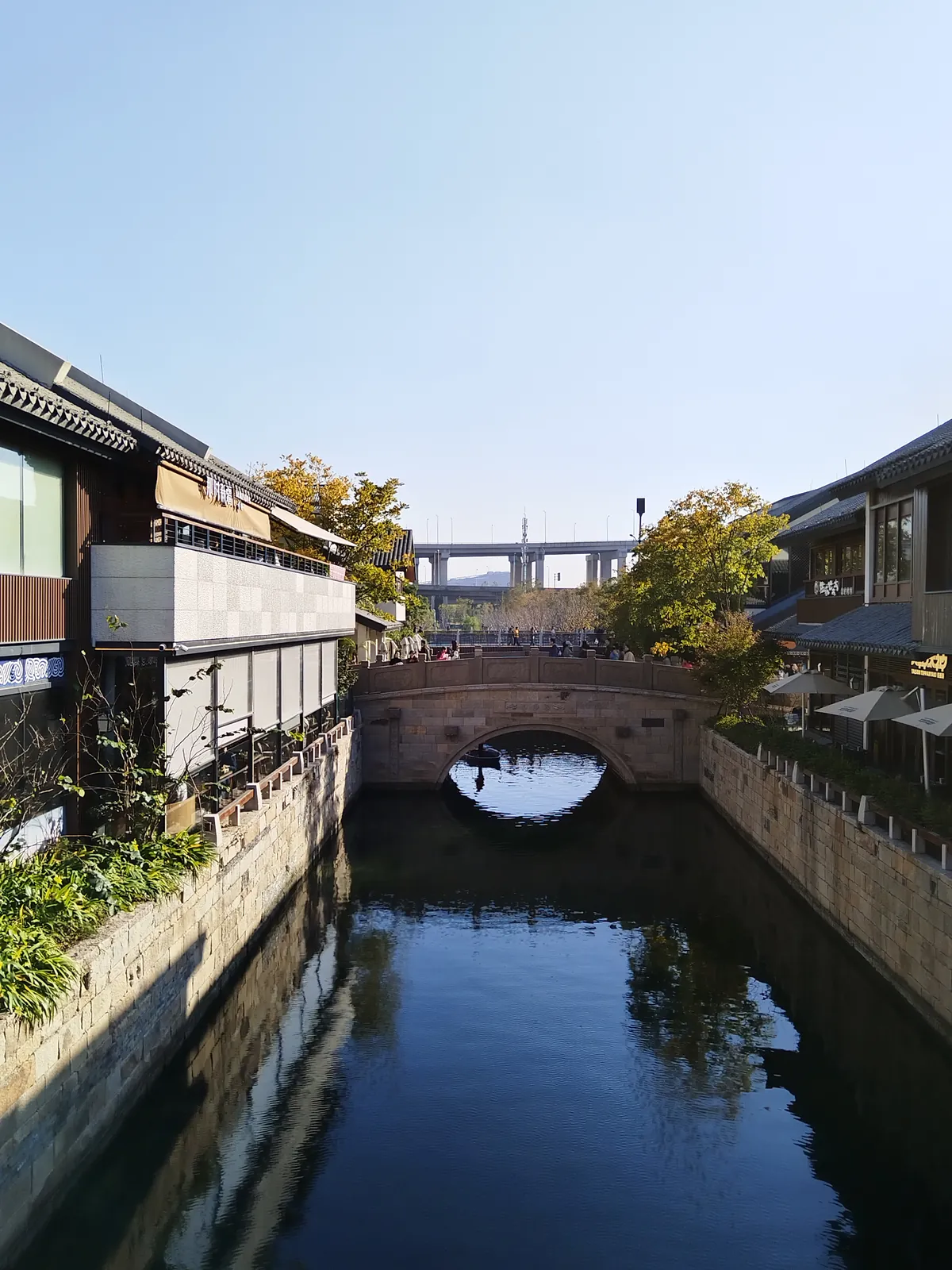
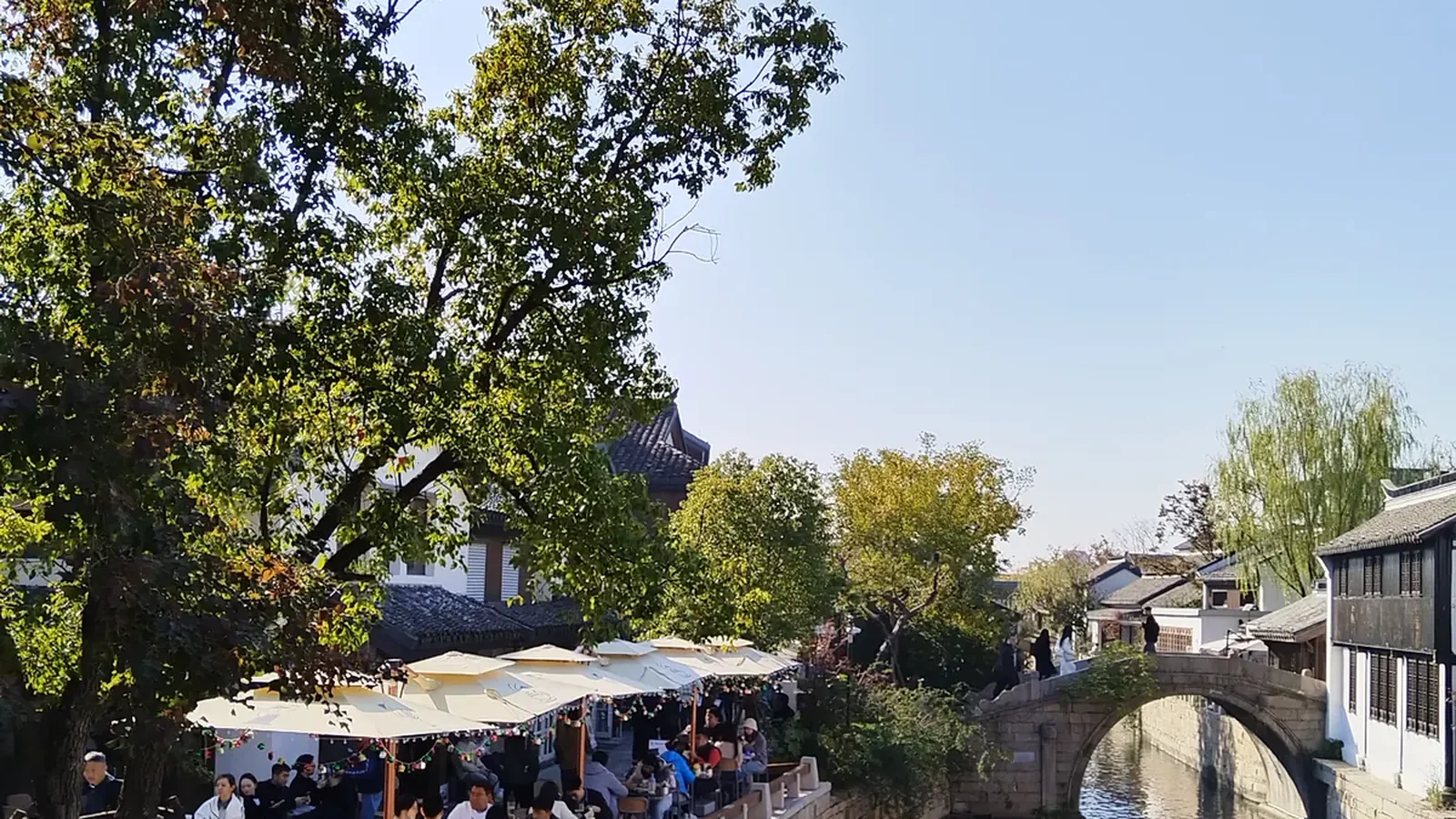
The water is the most solid thing. The canal is not decoration: cut-stone embankments, broad open water, properly made arches and balustrades on several stone bridges, so that standing on one sends the eye a long way along the canal and the willows.
Second, the trees. Surviving and new trees alike have real scale and give continuous shade; the street trees keep summer bearable. The planting is dense and changes colour with the season, which many new quarters fail at.
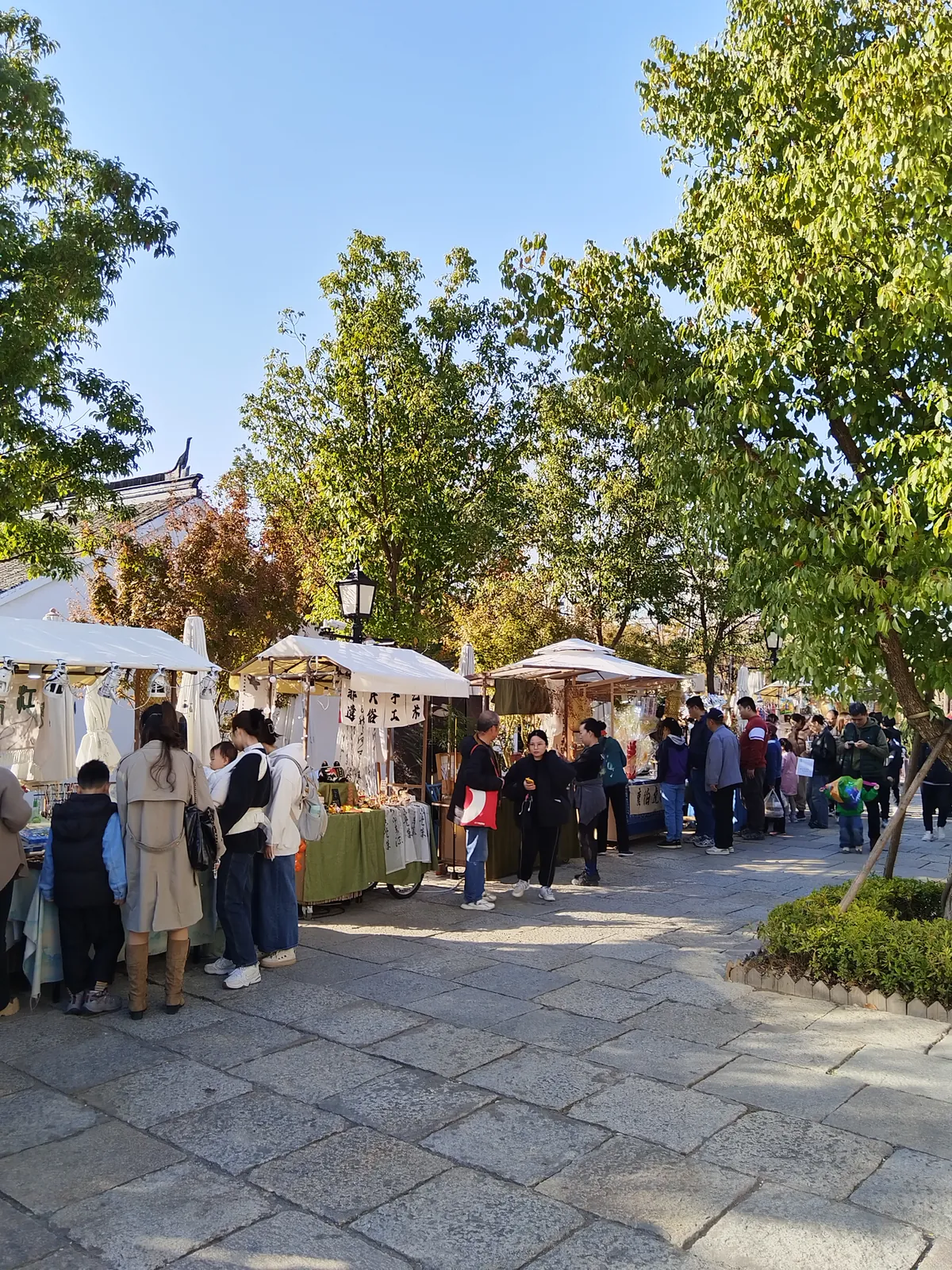
Third, the shops. The craft market sells cloth, knotting and hand-written signs rather than uniform souvenirs, and the shops are mostly food, coffee, select shops and homeware with restrained signage. The usual mistakes are avoided: no costume photo booths, no touting loudspeakers.
What is only set dressing
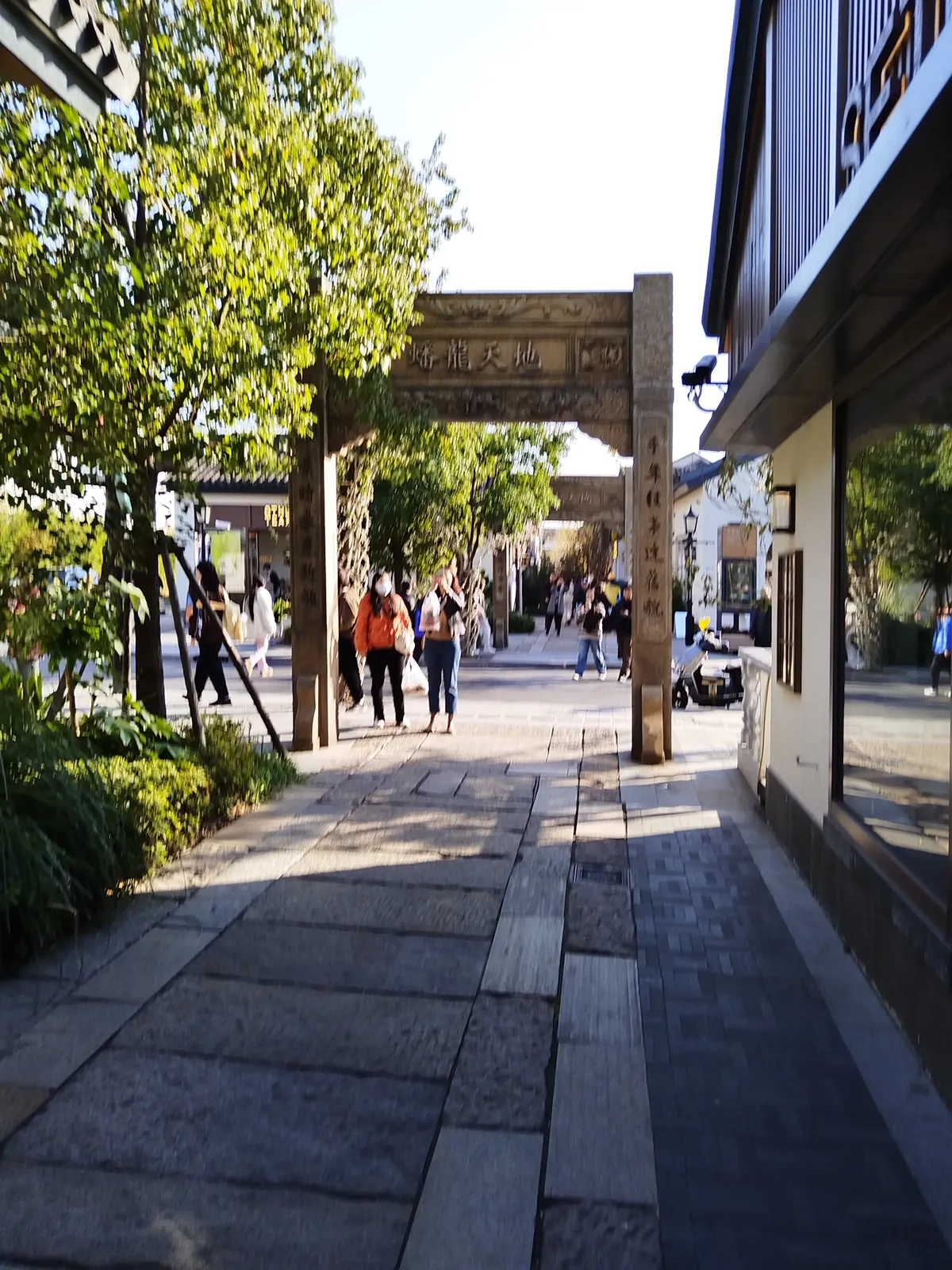
New is the first layer: stone cut clean, timber of a standard size, paving joints nearly identical, the age on the walls painted on. The work is careful, but the quarter comes from one set of drawings — one roof, one white wall, one window frame, moved around and little else changed.
The second layer is content: chain brands in the best positions, glass fronts, light boxes and period eaves assembled together, so inside it is the circulation of an open-air mall. The concrete elevated road at the end of the canal shows how close the city is — not ugly, but fatal to the idea of an ancient town.
The third layer is life, and there is none: no one trimming vegetables in a doorway, no laundry, no mending, only consumers and photographers. Busy, photogenic, a little hollow once it quietens, and nothing on site explains where the village came from.
Do the food and the shops justify the trip?
Yes, but only for eating and walking. Food is the most accomplished part: a long row of outdoor tables along the canal, full at midday and evening, covering Shanghainese and Jiangnan cooking through to Western food and coffee — wider than most water towns, and far cleaner. Prices are best checked on the day; no figures are given here.
Shopping depends on what you want: select shops, homeware, clothing and craft stalls take two or three hours, and a willing spender will not leave empty-handed, though anything unique to here follows mall logic. Expect a walk by the water, a better meal than the average scenic area and some shopping; if you want none of that, do not come.
Against Zhujiajiao and Nanxiang, and how to shape the visit
Zhujiajiao, in Qingpu, is genuinely inhabited: old bridges, streets, temples and houses, a heavily commercialised main street, and side lanes where daily life continues — the real thing, crowds included. Panlong Tiandi is the reverse: less crowded, clean, comfortable in its water and shops, with little old fabric. Nanxiang, in Jiading, is smaller again: a Ming garden, a pair of old pagodas and local snacks on its old street, the old plus a little commerce where Panlong is the new plus a lot. With one old place to choose, take Zhujiajiao; for a quieter garden, Nanxiang. The Guangfulin guide takes up the same trade-off.
On timing, the quarter is small: a slow walk, a meal and a turn through the market take three to four hours, one stop in half a day, no more. Come after three in the afternoon and stay until the lights come on: water and trees by day, lighting and restaurants after dark. It stays open in the evening, unlike a ticketed garden. Weekends and holidays are busy, a weekday afternoon is most comfortable, and opening hours, boat service and any booking requirement are for you to confirm on site. Metro Line 17’s Panlong Road station is nearby, with a walk from the exit; check the route on the day.
Who it suits: anyone wanting a walk by the water with a meal; families with children; couples; anyone not chasing sights; anyone staying towards Hongqiao who wants somewhere for half a day. Who it does not: anyone who came for genuine monuments and history; anyone hoping to see water-town life still lived; anyone who dislikes fake old towns enough to be uncomfortable throughout; anyone with two or three days in Shanghai and a full schedule. The verdict: as a well-planned new commercial canal quarter with good water engineering, Panlong Tiandi is worth an afternoon and a meal; as a historic site, it is not.
Photographs